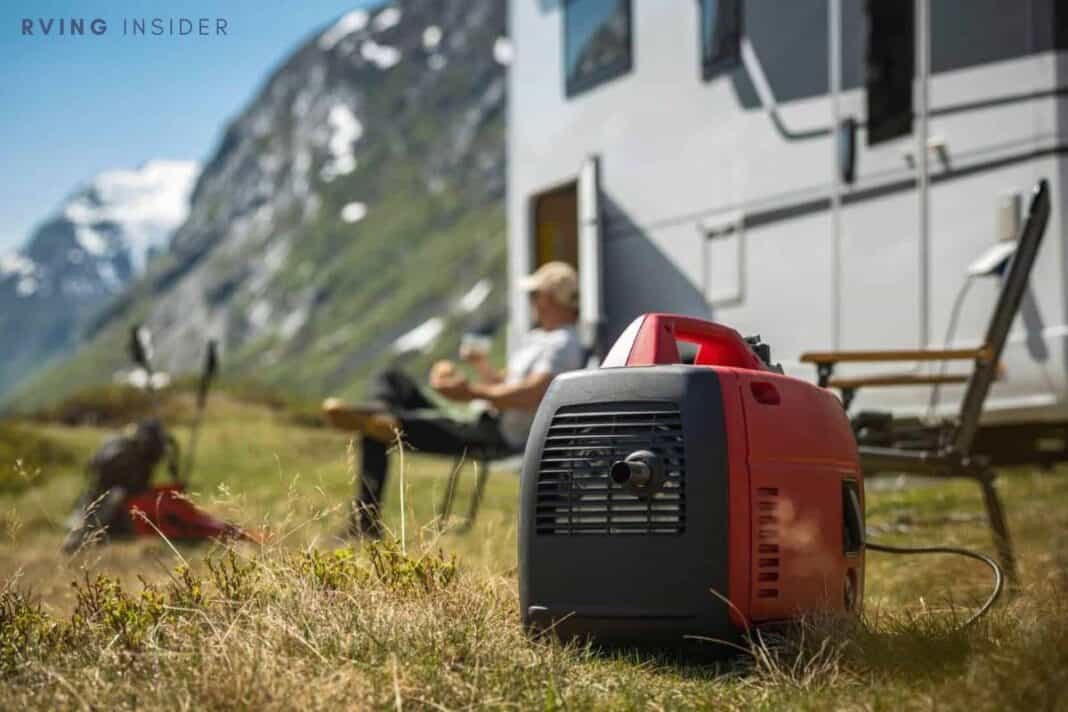
Whether you're hitting the open road in your RV, seeking solace in the great outdoors, or preparing your home for unexpected outages, one thing is certain: you don't want your power source to be the loudest thing around. Traditional generators can quickly turn a peaceful campsite into a cacophony, or make home backup power an annoying distraction. That's why understanding the Top Quiet Generators for RVs, Camping & Home Backup isn't just a convenience; it's a necessity for preserving tranquility.
Quiet portable generators have revolutionized how we access power on the go and during emergencies. These marvels of engineering balance efficient output with incredibly low noise levels, typically ranging from a hushed 50 dB to a manageable 65 dB at 23 feet. They achieve this impressive feat through sophisticated inverter technology, advanced mufflers, and clever soundproof designs, making them ideal for noise-sensitive environments where peace is paramount.
At a Glance: Your Quiet Generator Quick Guide
- Noise Matters: Aim for generators under 60 dB; 50-55 dB is whisper-quiet and ideal.
- Inverter Power: Essential for clean, stable power (safe for sensitive electronics) and significantly quieter operation.
- Watts Up? Differentiate between running watts (continuous) and peak/surge watts (for starting appliances).
- Portability First: Look for lightweight models (39-60 lbs) with wheels or handles for easy transport.
- Fuel Savvy: "Eco Mode" extends runtime and reduces noise by adjusting engine speed to load.
- Safety First: Carbon Monoxide (CO) detection, low-oil shutdown, and overload protection are non-negotiable.
- Connectivity: Ensure it has the outlets you need, like USB, 12V DC, and RV-ready (TT-30R).
Why a Quiet Generator is a Game-Changer (Beyond Just Noise)
It's easy to dismiss generator noise as a minor inconvenience, but the truth is, a loud generator can fundamentally detract from your experience, whether you're parked by a serene lake or trying to maintain normalcy at home during a blackout. Here’s why investing in a quiet model pays dividends far beyond just decibels:
- Comfort & Convenience: Imagine waking up to bird song, not engine roar. A quiet generator allows for peaceful sleep, undisturbed conversations, and a generally more pleasant environment. In an RV park, it means you're a good neighbor, not a nuisance.
- Versatility & Efficiency: Quieter operation often comes hand-in-hand with "Eco Mode" features. This dynamic engine speed adjustment optimizes fuel use, reducing both noise and your trips to the gas station. It means your generator can go almost anywhere without complaint, from national parks with strict noise ordinances to residential areas.
- Compliance with Rules: Many campgrounds, RV parks, and even homeowner associations have strict noise regulations. A quiet generator ensures you meet these requirements, avoiding fines or awkward encounters with park rangers or neighbors. You can [learn more about super quiet generators](placeholder_link slug="super-quiet-generator" text="deep dive into super quiet generators") to ensure you stay within acceptable limits.
- Health Benefits: Chronic exposure to loud noise isn't just annoying; it's a health hazard. It can lead to stress, sleep disturbances, increased heart rate, and reduced cognitive function. A quiet generator contributes to a healthier, less stressful experience for you and those around you.
- Enhanced User Experience: Ultimately, a quiet generator removes a significant pain point. Instead of constant humming or rattling, you get reliable power that simply fades into the background, letting you focus on what truly matters – your adventure, your family, or your peace of mind.
Decoding the Decibels: What "Quiet" Really Means
When we talk about generator noise, we're talking about decibels (dB), a logarithmic unit of sound intensity. What does that mean for you?
- Normal Conversation: Around 60 dB
- Quiet Library: Around 40 dB
- Whisper: Around 30 dB
So, when a generator is advertised at 50 dB, that's roughly equivalent to a quiet conversation or the hum of a refrigerator. A 60 dB generator is more like a normal conversation. Anything above 65-70 dB starts to become disruptive in a quiet environment.
The secret to these impressive numbers lies in a few key technologies: - Inverter Technology: This is the cornerstone of quiet, portable power. Unlike conventional generators that produce raw AC power directly from the engine's RPM, inverter generators convert the AC power to DC, then "invert" it back to clean AC power. This multi-step process allows the engine speed to fluctuate based on the load, meaning it doesn't have to run at full throttle all the time. Lower RPMs equal less noise and better fuel efficiency. Plus, this "clean" power is critical for safely running sensitive electronics like laptops, smartphones, and medical devices.
- Advanced Mufflers and Sound Dampening: Manufacturers invest heavily in larger, more efficient mufflers designed to trap and dissipate engine noise. Beyond the muffler, sound-dampening materials like acoustic foam and insulated casings are integrated into the generator's design, absorbing vibrations and preventing sound from escaping.
- Enclosed Designs: Many quiet generators feature fully enclosed bodies, which act as a natural sound barrier, trapping engine noise within the unit itself. These designs also protect internal components from the elements.
The Essential Checklist: Choosing Your Silent Power Partner
Selecting the right quiet generator isn't just about the lowest dB rating. It's about finding the perfect balance of power, features, and portability for your specific needs. Here's what to look for:
- Noise Level (The Closer to 50 dB, the Better):
As discussed, aim for models consistently under 60 dB. For the ultimate peace and quiet, especially in campgrounds or residential settings, units in the 50-55 dB range are exceptional. Always check the dB rating at a specified distance (e.g., "52 dB at 23 feet") and under varying loads (e.g., "at 25% load") for a realistic expectation. - Power Output (Running vs. Peak Watts):
- Running Watts: This is the continuous power a generator can supply to keep your appliances operating. Add up the running watts of all the devices you plan to power simultaneously.
- Peak (Starting) Watts: Many appliances, especially those with motors (like RV air conditioners or refrigerators), require a brief surge of extra power to start up. Ensure your generator's peak wattage can handle the highest starting requirement of any single device.
- Total Harmonic Distortion (THD): For sensitive electronics, look for generators with <3% THD to ensure clean, stable power that won't damage your gadgets. You can [figure out your RV's exact power needs](placeholder_link slug="rv-power-requirements" text="determine your RV's specific power requirements") with a simple calculation to avoid underpowering.
- Portability and Weight:
Will you be moving this generator frequently?
- Weight: Quiet generators often weigh between 39-60 lbs, making them manageable for one or two people to lift.
- Features: Look for integrated wheel kits, telescoping handles, or sturdy carry handles for easier transport. Compact dimensions are also a plus for storage.
- Fuel Efficiency and Runtime:
Longer runtime means fewer refueling stops, which is always a bonus.
- Eco Mode: This feature dynamically adjusts engine speed to match the power load, optimizing fuel consumption and reducing noise. It significantly extends runtime and is a must-have for quiet generators.
- Fuel Shut-off: Prevents fuel leakage during transport and helps prevent carburetor clogs from stale fuel when storing the generator.
- Fuel Type: Gasoline is standard, but dual-fuel options (gasoline and propane) offer versatility and longer storage times for propane.
- Safety Features:
These are non-negotiable for safe operation.
- Carbon Monoxide (CO) Detection Shutdown: Crucial for preventing dangerous CO buildup, automatically shutting off the generator if CO levels become unsafe.
- Low-Oil Automatic Shutoff: Protects the engine from damage due to insufficient lubrication.
- Automatic Overload Protection: Prevents damage to the generator and connected appliances if you try to draw too much power.
- Spark Arrestor: Required for use in many public lands and national forests to prevent wildfires. Remember to always practice [safe generator practices while camping](placeholder_link slug="camping-generator-safety" text="safe generator practices while camping").
- Connectivity and Convenience:
- Multiple Output Ports: Ensure a variety of AC outlets (120V standard), USB ports for charging devices, and 12V DC outlets for automotive accessories.
- RV-Ready Outlets: A TT-30R (30-amp RV) outlet is essential for directly connecting to your RV without an adapter.
- Remote or Electric Start: Provides effortless starting, a huge convenience compared to pull-starts.
- Parallel Connection Capability: Allows you to link two compatible generators together to double your power output, ideal for scaling up when needed.
- Digital Display: An LED data center showing runtime, fuel level, and power output is incredibly useful.
- Environmental Compliance: Look for EPA and CARB (California Air Resources Board) compliance, ensuring the generator meets strict emissions standards.
Top Contenders: Our Pick of Quiet Generators
Based on rigorous evaluation, performance data, and real-world user feedback, here are some of the quietest and most reliable generators on the market, catering to various power needs and budgets.
For Mid-Range Power & RV Comfort:
- Westinghouse 5000 Peak Watt:
- Power: 3900 running watts, 5000 peak watts (<3% THD).
- Noise: Quiet for its power class.
- Key Features: Remote electric start, robust telescoping handle, built-in wheels, LED data center, and a full suite of outlets including an RV-Ready TT-30R. A fantastic option for those needing significant power for their RV or home appliances with added convenience.
- ERAYAK 4500W:
- Power: 3500 running watts, 4500 peak watts.
- Noise: 60.5 dB.
- Portability: Weighs 55.12 lbs (20″x12.2″x19.3″).
- Key Features: Advanced inverter technology, Eco Mode for fuel efficiency, and an optional wheel kit for easier transport. A solid choice balancing power and portability.
- WEN 3600-Watt (model 56360i):
- Power: 2900 running watts, 3600 peak watts.
- Noise: Around 65 dB at quarter load, which is respectable for its output.
- Portability: Weighs 46 lbs.
- Key Features: Delivers clean power, features fuel shut-off to prevent clogs, Eco-mode, and is RV-ready. A popular and reliable mid-power option.
- Generac 7153 GP3300i:
- Power: 2500 running watts, 3300 starting watts.
- Noise: As low as 52-55 dBA at low loads – impressively quiet.
- Portability: Under 60 lbs, 1-gallon tank for up to 8 hrs @ 50% load.
- Key Features: PowerRush technology for increased starting capacity, COsense™ for CO detection, Economy Mode, and a 30A twist-lock outlet. A premium choice for quiet operation and performance.
For Lightweight Portability & Camping:
- RINADURS 2800W:
- Power: 2500 running watts, 2800 peak watts (<3% THD).
- Portability: Weighs 45.6 lbs.
- Key Features: Multiple outlets including QC3.0 Type-C, low fuel alarm, overload protection, and essential CO detection shutdown. A compact option with modern connectivity.
- Pulsar PGD40ISCO 4000W:
- Power: 3200 running watts, 4000 peak watts.
- Portability: Weighs 51 lbs.
- Key Features: 12oz tank offering approximately 4.5 hours runtime at half load. A strong contender for those needing higher power in a portable package.
- Westinghouse 2550 Peak Watt Dual Fuel:
- Power: 1900 running watts, 2550 starting watts.
- Noise: As low as 52 dBA – exceptionally quiet.
- Portability: Weighs ~43 lbs.
- Key Features: Dual fuel capability (gasoline/propane), Economy Mode, CO sensor, and RV-ready TT-30R. Offers excellent versatility and quiet operation for camping or tailgating. Runtime is impressive at up to 12 hours on gas and 34 hours on propane.
- PowerSmart 2500-Watt Gas Powered:
- Power: 1900 running watts, 2500 starting watts.
- Noise: 56 dB at 23 feet.
- Portability: 1.06-gallon tank for ~5.5 hrs @ 50% load or ~11 hrs @ 25% load.
- Key Features: Foldable handle and built-in CO sensor. A lightweight, user-friendly option for smaller power needs.
- Honda EU2200ITAN 2200-Watt:
- Power: 2200 watts.
- Noise: 48-57 dBA – industry standard for quietness.
- Portability: 1-gallon tank for up to 8 hrs @ 25% load, weighs 44 lbs.
- Key Features: CO-MINDER™ (CO detection), Smart Throttle, and advanced inverter technology. Renowned for its reliability and super quiet performance, a long-standing favorite.
- Yamaha EF2200iS:
- Power: 1800 running watts, 2200 starting watts.
- Noise: 57 dBA at 1/4 load.
- Portability: 1.24-gallon tank for 9-10.5 hours runtime.
- Key Features: Automatic load-sensing throttle, illuminated LED display, CO sensor, and RV-ready outlet. Another top-tier quiet generator known for its durability and performance.
- Champion Power Equipment 2500-Watt Dual Fuel:
- Power: 1850 running watts, 2500 starting watts (gasoline).
- Noise: 53 dBA at 23 feet – remarkably quiet for its class.
- Portability: Dual fuel, weighs 39 lbs.
- Key Features: CO Shield® sensor, includes a propane hose. Excellent runtime (up to 11.5 hours on gas, 34 hours on propane) in a super lightweight, versatile package.
Behind the Scenes: How We Test Quiet Generators
To provide truly trustworthy recommendations, our testing methodology goes beyond simply reading spec sheets. We put these generators through their paces in simulated real-world conditions:
- Acoustic Profiling: We use professional-grade decibel meters at various distances (10, 23, and 50 feet) under different loads (25%, 50%, 75%, and 100%). This gives us a comprehensive understanding of their noise footprint, confirming manufacturers' claims and identifying any unexpected spikes.
- Power Output & Stability: We connect a range of typical RV, camping, and home backup devices, from sensitive electronics to inductive motor appliances (like small air conditioners), to assess consistent power delivery and the purity of the inverter's sine wave (THD). We monitor voltage and frequency stability.
- Fuel Efficiency & Runtime Validation: We measure actual fuel consumption over extended periods under varying loads to verify "Eco Mode" effectiveness and compare real-world runtime against advertised figures.
- Durability & Vibration Analysis: Generators are tested on different surfaces (concrete, grass, gravel) to assess vibration levels, which can contribute to perceived noise and component wear. We also check the robustness of handles, wheels, and casing materials.
- Safety Feature Activation: We simulate low oil levels and overload conditions to ensure automatic shutdown mechanisms (low-oil, overload protection, CO detection) trigger reliably and quickly.
- User Experience & Ergonomics: This includes evaluating the ease of starting (pull-cord effort, electric start reliability), control panel intuitiveness, ease of maintenance access, and overall portability.
- Real-Life Simulations & Customer Feedback: Beyond laboratory testing, we consider how these generators perform in actual camping trips, RV outings, and simulated home backup scenarios. We also pore over extensive customer reviews and expert forums to identify any common issues or standout features not immediately apparent in initial testing.
Maximizing Your Quiet Investment: Maintenance & Noise Reduction Tips
Even the quietest generator can get louder over time if not properly cared for. Here are key strategies for maintenance and further noise reduction:
- Regular Maintenance is Key: Just like your car, your generator needs routine care. Changing the oil and cleaning/replacing air filters according to the manufacturer's schedule significantly reduces operational noise and ensures peak efficiency. A well-maintained engine runs smoother and quieter. Remember to [keep your generator running smoothly](placeholder_link slug="generator-maintenance-tips" text="keep your generator running smoothly") with regular check-ups.
- Muffler Upgrade (Consider it): For some models, aftermarket high-performance mufflers can be a game-changer, significantly cutting sound levels. However, ensure any upgrade is compatible and doesn't void your warranty.
- Strategic Positioning:
- Flat, Stable Surface: Always place your generator on a flat, solid, non-combustible surface. This minimizes vibrations and prevents rattling noises.
- Vibration-Dampening Mats: A simple and effective trick is to place a rubber mat, anti-vibration pad, or even a thick piece of plywood underneath the generator. This absorbs engine vibrations before they can transmit to the ground or resonate.
- Distance: The farther away the generator is, the quieter it will sound. Always ensure proper ventilation and exhaust direction.
- DIY Sound Barriers (with Caution): For those seeking extra quiet, you can construct a simple three-sided enclosure.
- Use heavy-duty plywood or similar material.
- Line the interior with acoustic foam or sound-absorbing blankets.
- CRITICAL: Maintain ample clearance (2-3 feet) around the generator for proper ventilation and exhaust to prevent overheating and carbon monoxide buildup. Never fully enclose a running generator.
- Baffle Boxes (Advanced Noise Reduction): These are more sophisticated, fully encased boxes lined with acoustic insulation and equipped with ventilation fans to manage heat and exhaust. While highly effective, they require careful design to ensure safety and prevent overheating. These are typically for more stationary home backup setups rather than portable camping use.
Common Questions About Quiet Generators
You've got questions, we've got crisp answers.
Q: How quiet is "quiet" in practical terms?
A: A generator at 50-55 dB is often compared to a quiet conversation, a hum from a refrigerator, or even a running dishwasher from another room. At 60-65 dB, it's more akin to normal office chatter. Anything below 60 dB is generally considered excellent for noise-sensitive environments.
Q: Can I use a quiet generator indoors for home backup?
A: Absolutely NOT. Even the quietest generators produce lethal carbon monoxide (CO) gas, which is odorless and colorless. Never run a generator indoors, in a garage, basement, or any enclosed space. Always operate generators outdoors, far from windows, doors, and vents, ensuring proper ventilation. This is paramount for safety, regardless of how quiet the unit is. Understanding [what you need for reliable home backup](placeholder_link slug="home-backup-power-needs" text="what you need for reliable home backup") means prioritizing safety above all else.
Q: What exactly is inverter technology and why is it important for quiet generators?
A: Inverter technology converts the raw AC power produced by the engine into DC, then "inverts" it back into clean AC power. This allows the engine to adjust its speed based on the power demand, instead of running at a constant high RPM. This variable speed results in significantly quieter operation and much better fuel efficiency. The "clean" power (low THD) is also vital for safely powering sensitive electronics without damage.
Q: Are dual fuel generators quieter than gasoline-only models?
A: Not inherently. A generator's noise level is primarily determined by its design (inverter technology, muffler, soundproofing), not just its fuel source. However, propane tends to burn cleaner, which can contribute to smoother engine operation and potentially slightly less vibration noise over time, assuming proper maintenance. Dual fuel offers fantastic versatility, allowing you to choose the most convenient or available fuel.
Q: How do I calculate the power I need for my RV, camping trip, or home backup?
A:
- List Appliances: Make a list of all the appliances you plan to run simultaneously.
- Find Running Watts: For each item, find its running (continuous) wattage (usually on a label or in the manual).
- Find Starting Watts: Identify the item with the highest starting (surge) wattage. This is typically an appliance with a motor (AC, refrigerator, microwave).
- Add Running Watts: Sum up the running watts for all appliances you need on.
- Calculate Total Peak: Add the highest starting wattage to the total running watts (excluding that item's running watts). This gives you your total peak power requirement.
- Add a Buffer: Always add a 10-20% buffer to your calculated running and peak watts to account for unexpected demands or future additions.
The Final Word: Powering Your Adventures, Quietly
Choosing one of the top quiet generators is more than just a purchase; it's an investment in peace of mind, comfort, and the ability to enjoy your surroundings without disruption. Whether you're planning a serene RV trip, a remote camping getaway, or simply ensuring your home stays functional during an emergency, the right quiet generator provides reliable power without the roar. By understanding the key considerations—from decibel levels and power output to essential safety features and portability—you can confidently select a generator that truly fits your lifestyle. Get ready to power your world, silently.