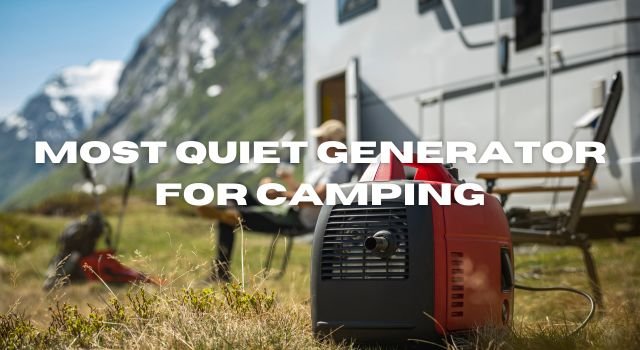
Tired of generators that sound like a jet engine warming up in your backyard? You're not alone. The quest for reliable power often comes with the unwelcome roar of an engine, shattering the peace of a camping trip, a quiet evening during an outage, or even a serene job site. But what if you could have robust, dependable power without the cacophony? That's precisely what we set out to discover with our deep dive into Quiet Generator Reviews & Performance Comparisons.
We’ve seen and heard it all, from the rumbling behemoths of yesteryear to today's whisper-quiet marvels. Our mission was to cut through the noise (pun intended) and bring you the most useful, trustworthy insights into portable power that won't disrupt your zen. We're talking about models specifically designed to keep decibels low while keeping your essentials running.
At a Glance: What You Need to Know About Quiet Generators
- The Gold Standard: Inverter generators are your best bet for quiet operation, typically running at 50-60 dB – quieter than a normal conversation.
- Truly Silent: Solar generators (portable power stations) offer near-silent operation, ideal for noise-sensitive environments, though often with lower continuous power output.
- Key Features to Look For: Beyond low noise, prioritize wattage, fuel type (gas, dual-fuel), portability, Eco Mode for efficiency, and crucial safety features like CO sensors.
- Real-World Testing: Our picks are based on hands-on evaluation, assessing noise levels, ease of use, and actual power output with various tools and appliances.
- Beyond the Purchase: Proper placement, regular maintenance, and even DIY sound reduction can further quiet your generator's operation.
The Unbearable Racket (and Why Quiet Matters)
For years, portable generators were synonymous with noise. Whether you needed backup power for your home, juice for tools at a remote job site, or just to keep your RV fridge cold, you had to endure the persistent drone. This isn't just an annoyance; prolonged exposure to loud noise can be stressful, disrupt sleep, and even lead to health issues. Plus, many campgrounds, outdoor venues, and even residential areas have strict noise ordinances that traditional generators simply can't meet.
Enter the quiet generator. These aren't just scaled-down versions of loud models; they represent a significant leap in design and technology, specifically engineered to deliver power with minimal acoustic footprint. The benefits are clear: a more peaceful camping experience, a less disruptive home during an outage, or a more pleasant environment for any outdoor activity. It’s about restoring calm while providing essential electricity.
How We Tested: Our Approach to Quiet Performance
To bring you truly actionable insights, we didn't just read spec sheets. We analyzed over 35 leading portable generators, then selected the top contenders for rigorous, direct testing. Our methodology focused on what truly matters to you: brand reputation, customer satisfaction, power output, cost, and, of course, the actual noise level.
We honed in on inverter generators—the undisputed champions of quiet engine operation—aiming for models that register at 60 decibels (dB) or less. To put that in perspective, 60 dB is about the level of a normal conversation or a humming dishwasher. We also included solar generators (portable power stations) which, by their nature, produce little to no operational noise. Each chosen model was assembled, fueled (if applicable), and put through its paces, running everything from small electronics and lights to power-hungry tools and RV appliances. We listened, measured, and felt the difference, ensuring our recommendations are grounded in real-world performance.
The Contenders: Our Top Picks for Quiet Generators (with Performance Comparisons)
Here’s a breakdown of the best quiet generators we found, each excelling in different scenarios but all committed to keeping the decibels down.
1. Honda 2200-Watt Inverter Generator With CO-Minder (Best Overall)
The Honda EU2200i is, quite simply, a legend in the quiet generator space, and for good reason. It’s portable, incredibly reliable, easy to operate, and astonishingly quiet. For tailgating, camping, or picnicking, its engine hum practically disappears into the background.
Powered by Honda's commercial-grade GXR120 engine, it delivers 120 volts and up to 2,200 peak watts (1,800 running watts). You get a 125V-20A duplex outlet and the convenience of the Honda My Generator app for remote monitoring. Need more power? It’s parallel-ready, so you can link it with another EU2200i. Safety is paramount with its CO-Minder carbon monoxide sensor and automatic shutdown. A 1-gallon tank provides up to 8 hours of run time at 25% load. Weighing around 50 pounds (44 lbs for the ITAN model), it’s easy to move. The only minor gripe? No built-in USB ports.
2. Pulsar 2200-Watt Dual-Fuel Quiet Inverter Generator (Best Value)
If you're looking for a generator that offers versatility without breaking the bank, the Pulsar 2200-Watt Dual-Fuel is a fantastic choice. This inverter generator is capable of powering small tools and devices for up to 8 hours.
With a 1.18-gallon fuel tank, it impressively runs on either gasoline or propane, giving you excellent flexibility. It delivers up to 1,800 running watts and 2,200 peak watts. While Pulsar claims a 60 dB noise level, our testing found it to be a bit louder, comparable to a vacuum cleaner. Still, for its price point and dual-fuel capability, it's an excellent option for light power needs and DIY projects.
3. Westinghouse iGen4500 Quiet Inverter Generator (Best for Camping)
For campers and RV enthusiasts who need more muscle without the roar, the Westinghouse iGen4500 stands out. This 4,500-watt gasoline generator excels in power output, versatility, and relative portability for its class.
Its generous 3.4-gallon tank can keep things running for an impressive 18 hours. Crucially, it operates at a remarkably low 52 dB(A), which is quieter than a normal conversation. It offers a wide array of power ports, including a 30A outlet, two 20A outlets, and two USB ports, making it perfect for running grinders, saws, and all your essential RV amenities. At around 105 pounds (empty), it's a heavier unit, but its power and quiet operation make it a camping game-changer.
4. Generac GB2000 Portable Power Station (Best Solar Power)
When absolute silence is your priority, solar power is the answer. The Generac GB2000 Portable Power Station delivers up to 3,200 peak watts and 1,600 running watts in a virtually silent package.
This isn't a traditional generator; it's a battery-powered station that can be recharged via solar panels (sold separately) or a wall outlet. It comes equipped with three AC ports, four USB ports, a 12V DC port, and even a wireless charging pad. Its efficiency is notable, as it only draws power when needed. Weighing 43 pounds, it’s highly portable, making it an excellent choice for truly noise-free power.
5. Ryobi 2300-Watt Bluetooth Inverter Generator (Best Bluetooth Connectivity)
The Ryobi 2300-Watt Bluetooth Inverter Generator brings modern connectivity to portable power. This gasoline generator allows you to monitor its performance and even shut it down remotely via a mobile app, a huge convenience when you’re not right next to the unit.
It’s quiet enough for easy conversation while operating, hitting that sweet spot for social gatherings or comfortable work environments. While it capably handles most power tools, it did show a slight lag when powering high-wattage devices like a table saw, suggesting it’s better suited for general use rather than heavy-duty construction tasks.
6. Generac iQ3500 Portable Inverter Generator (Most User-Friendly)
Generac’s iQ3500 is designed with user experience in mind. This 3,500-watt generator offers incredibly easy operation, starting with a simple pushbutton electric starter. Its informative LCD screen displays power output, fuel level, and estimated run time, keeping you in the know.
It provides a variety of outlets, including a 20A duplex, a 30A L5-30R connection, and two USB ports. In Eco mode, it purrs at a respectable 56 dB(A), nudging up to 61 dB(A) in normal operation. At 109.1 pounds, it’s a substantial unit, but its user-centric design makes it incredibly accessible despite its power.
7. WEN 3600-Watt Portable Inverter Generator
The WEN 3600-Watt Portable Inverter Generator offers a strong blend of power and portability. This lightweight unit provides 3,600 peak watts and 2,900 running watts, suitable for a range of applications.
Its 1.6-gallon tank provides about 5 hours of run time at half load, and its Eco mode helps conserve fuel and reduce noise. Operating at around 65 dB at a quarter load, it’s comparable to a normal conversation, making it tolerable for most uses. It includes a fuel shut-off feature and various outlets, including an RV-ready TT-30R. Weighing just 46 pounds, it's one of the lighter, more powerful options available.
8. Generac 7153 GP3300i Portable Inverter Generator
For reliable emergency backup power, the Generac 7153 GP3300i is a solid choice. It boasts 3,300 peak watts and 2,500 running watts, leveraging PowerRush technology to handle those initial starting surges from demanding appliances.
Its noise level hovers around 52-55 dBA at low loads, keeping disruptions minimal. A 1-gallon fuel tank delivers up to 8 hours of run time at 50% load. Safety is enhanced with Generac’s COsense feature, which automatically shuts down the generator if unsafe carbon monoxide levels are detected. At under 60 pounds, it’s manageable for transport.
9. Yamaha EF2200iS Inverter Generator
Yamaha’s EF2200iS strikes an excellent balance between portability, power, and quiet operation. It provides 2,200 peak watts and 1,800 running watts, making it versatile for many needs.
Operating at approximately 57 dBA at 1/4 load, it's pleasantly quiet. Its 1.24-gallon fuel tank, combined with Yamaha’s Smart Throttle feature (which adjusts engine speed to demand), allows for impressive run times of 9-10.5 hours. It also includes a CO sensor for safety and various outlets, including an RV-ready option.
10. Champion Power Equipment 2500-Watt Dual Fuel Inverter Generator
The Champion Power Equipment 2500-Watt Dual Fuel Inverter Generator is a standout for its lightweight design and dual-fuel versatility. Weighing a mere 39 pounds, it’s exceptionally easy to transport.
It produces 2,500 peak watts and 1,850 running watts on gasoline, operating at a quiet 53 dBA from 23 feet away. Its 1.1-gallon tank provides 11.5 hours of run time at 25% load with gasoline, extending to 34 hours with a 20-pound propane tank. The integrated CO Shield safety feature adds peace of mind.
Deciphering the Decibels: What Truly Makes a Generator Quiet?
You've heard "decibels" thrown around, but what does it really mean for your generator's noise level? And how do these quiet powerhouses achieve their hushed operation?
Inverter Technology: The Silent Revolution
The secret sauce behind most quiet portable generators is inverter technology. Traditional generators run their engines at a constant, high RPM to produce a fixed frequency AC current. This means they're always working hard (and loud), regardless of how much power you actually need.
Inverter generators are different. They convert the raw AC power generated by the engine into DC, then "invert" it back to clean AC power using a sophisticated microprocessor. This allows the engine speed to fluctuate based on the power demand. If you're only running a few lights, the engine idles down, dramatically reducing fuel consumption and, crucially, noise. When you plug in a power tool, the engine revs up only as much as needed. This "load-sensing" capability is the core reason they are so much quieter and more fuel-efficient than conventional models.
Comparing dB Levels: A Real-World Perspective
Understanding decibel (dB) ratings can be tricky because the scale is logarithmic, not linear. A 10 dB increase represents a doubling of perceived loudness. So, a generator at 70 dB is much louder than one at 60 dB.
- 50-60 dB: This is the sweet spot for quiet generators. It's often compared to:
- 50 dB: A quiet office, a refrigerator hum.
- 60 dB: Normal conversation, a dishwasher.
- 70 dB: A vacuum cleaner, a car at 60 mph from 25 feet.
- 90 dB: A lawnmower, a hair dryer.
- 100+ dB: A jackhammer, a motorcycle.
The difference between a 60 dB generator and a 75 dB conventional model is stark – the quieter one makes a huge difference to your comfort and peace. Always check if the dB rating is measured from a distance of 23 feet, as this is the industry standard for comparison. Also, note if the rating is for idle or full load; quieter generators often have a range (e.g., 52-60 dB depending on load).
Beyond Inverters: Other Noise-Reduction Features
While inverter technology is paramount, manufacturers employ other clever tricks to keep things quiet:
- Advanced Mufflers: Larger, more intricate exhaust systems are designed to dampen sound waves.
- Sound-Dampening Enclosures: Many quiet generators feature fully enclosed housings lined with acoustic materials that absorb engine noise before it escapes.
- Anti-Vibration Mounts: Rubber mounts help isolate the engine from the frame, reducing vibrations that contribute to overall noise.
Your Buying Guide: Key Factors for Choosing the Right Quiet Generator
Picking the perfect quiet generator involves balancing power, portability, features, and of course, its hushed operation. Here's what to consider:
Power Output (Wattage): Sizing for Your Needs
Don't buy a generator that's too small or too large. You need to match the generator's capacity to what you plan to power.
- Small Devices/Light Use (1,000-1,600 running watts): Great for charging phones, running a few lights, small fans, or low-wattage electronics.
- Camping/RV/Light Home Backup (2,000-3,000 running watts): Can handle essential appliances like a refrigerator, microwave, TV, and basic lighting. Many quiet inverter generators fall into this range.
- Serious Home Backup/Job Sites (3,000+ running watts): Powers multiple larger appliances simultaneously, power tools, or even a central AC unit (for higher end models).
Remember that surge watts (peak watts) are for starting motors, while running watts are what the generator can sustain continuously. Add up the running watts of all the items you want to use simultaneously, plus the highest starting wattage of any single item, to determine your minimum requirement.
Fuel Type & Capacity: Gas, Dual-Fuel, or Solar?
- Gasoline: Most common. Check tank capacity and estimated run time at different loads. Larger tanks mean longer run times.
- Dual-Fuel (Gasoline/Propane): Offers fantastic flexibility. Propane stores indefinitely and burns cleaner, while gasoline provides higher power density. Ideal for emergencies where one fuel might be scarce.
- Solar (Portable Power Stations): Absolutely silent and emission-free. Recharged via solar panels or wall outlets. Best for smaller power needs, electronics, and situations where zero noise or fumes are critical. Keep in mind their capacity (measured in Watt-hours, Wh) and recharge times.
Noise Level: The 50-60 dB Sweet Spot
This is paramount. As discussed, aim for models rated between 50 and 60 dB. This range ensures you can comfortably hold a conversation nearby without shouting. Anything above 65 dB starts to become noticeably intrusive, especially over extended periods. Pay attention to reviews that mention real-world noise performance, as manufacturer claims can sometimes be optimistic.
Size & Weight: Portability Considerations
- Lightweight (40-60 pounds): Easily carried by one person. Perfect for camping, tailgating, or moving around a job site frequently. The Honda EU2200i and Champion 2500-Watt are great examples.
- Heavier (70-100+ pounds): Often comes with built-in wheels and handles. These units usually offer more power and features but require more effort to move. The Westinghouse iGen4500 and Generac iQ3500 fit this category.
Essential Features You Can't Live Without
Beyond the basics, certain features enhance usability, safety, and performance:
- Parallel Capability: Allows you to connect two identical inverter generators to double your power output. A brilliant way to get more power when needed without having to invest in a single, much larger (and often louder) unit.
- Electric Start: A simple pushbutton or switch replaces the pull cord, making starting effortless. Some even offer remote start via a key fob or app (like the Ryobi).
- Multiple Outlets: Ensure you have enough receptacles for your devices. Look for at least two standard household outlets (120V-20A). RV-ready outlets (TT-30R) and USB ports are huge bonuses.
- Eco Mode (or Smart Throttle): A must-have for quiet inverter generators. This feature automatically adjusts engine speed to match the load, saving fuel and significantly reducing noise.
- CO Sensor (Carbon Monoxide Shutoff): A critical safety feature. It automatically shuts down the generator if dangerous levels of carbon monoxide are detected. Look for features like Honda's CO-Minder or Generac's COsense.
- Environmental Compliance: Ensure the generator meets EPA (Environmental Protection Agency) and CARB (California Air Resources Board) standards, especially if you live in California.
- Indicator Lights & Safety Features: Low oil shutdown, overload protection, and fuel gauges are essential for safe operation and monitoring.
Beyond the Specs: Real-World Use Cases for Quiet Generators
Understanding why a quiet generator is superior really shines when you consider its common applications:
Camping & RV Adventures: Powering Your Escape
Imagine enjoying the tranquil sounds of nature around your campsite, only to have them drowned out by a rattling generator. Quiet inverter generators solve this problem. They provide enough power for your RV's lights, fridge, microwave, and electronics without disturbing your fellow campers or the peaceful environment. The low noise output makes them ideal for campgrounds with strict quiet hours. Models like the Westinghouse iGen4500 and Yamaha EF2200iS are perfect companions for hitting the open road or settling into a secluded spot.
Home Power Outages: Keeping Calm During a Storm
When the lights go out, a quiet generator can be a true lifeline. Instead of a noisy, anxiety-inducing machine, you get a calm, steady hum that powers your essentials: a refrigerator to save food, lights to navigate safely, a fan or small heater for comfort, and crucially, charging for your communication devices. This reduces stress during an already difficult situation. For home backup, look for models with good run times and essential safety features like CO sensors, such as the Generac GP3300i or Honda EU2200i.
Work Sites & Outdoor Events: Powering Productivity and Fun
From construction sites with noise regulations to outdoor weddings that need discreet power for music and lighting, quiet generators are invaluable. They allow workers to communicate more easily and prevent the generator from becoming a focal point of disruption at an event. Their clean power output is also safer for sensitive electronics often used at events. The ability to link two units via parallel capability makes them versatile for varying power demands at job sites or larger gatherings.
Maximizing the Quiet: Tips for Reducing Generator Noise
Even the quietest generator can benefit from a little extra attention. Here are practical steps to further reduce noise and ensure optimal performance:
Regular Maintenance: A Quieter, More Efficient Machine
A well-maintained generator runs smoother and quieter.
- Change Oil Regularly: Fresh oil reduces friction and engine strain, leading to less noise.
- Clean/Replace Air Filters: A clogged air filter makes the engine work harder, increasing noise and reducing efficiency.
- Check Spark Plugs: A properly functioning spark plug ensures efficient combustion, preventing misfires and rough engine operation.
Upgrade the Muffler: Sometimes Bigger (and Better) is Quieter
For some models, particularly older ones or those with basic mufflers, an aftermarket high-performance muffler can significantly dampen exhaust noise. This is usually an easy swap for DIY enthusiasts. Just ensure it’s compatible with your generator model.
Strategic Positioning: Location, Location, Location!
Where you place your generator makes a huge difference.
- Distance is Key: Every 10 feet you move a generator away can reduce the perceived noise by several decibels.
- Flat, Stable Surface: Prevents vibrations and rattling.
- Away from Reflective Surfaces: Avoid placing it near walls or fences that can bounce sound back towards you. Position it where sound can dissipate.
- Consider Wind Direction: If possible, position it so prevailing winds carry the sound away from your activity area.
- Always Prioritize Safety: Ensure ample ventilation to prevent carbon monoxide buildup. Never operate a generator indoors or in enclosed spaces. Keep it at least 20 feet from windows, doors, and vents.
Anti-Vibration Pads & Sound Enclosures: Absorbing the Rattle
- Anti-Vibration Mats: Place the generator on a heavy rubber mat or anti-vibration pads. These absorb much of the low-frequency rumble that travels through the ground.
- Pre-Built Sound Enclosures: Some manufacturers or third parties offer specialized sound-dampening covers or enclosures. These are designed to reduce noise while maintaining proper airflow for cooling and exhaust.
- DIY Sound Barriers (Baffle Boxes): For the handy among us, a simple three-sided plywood enclosure (open top for ventilation) lined with acoustic foam or insulation can work wonders. Ensure 2-3 feet of space around the generator for air circulation and direct the exhaust away from the enclosure's openings. For an even more advanced solution, a "baffle box" is an acoustically insulated box with carefully designed air intake and exhaust paths (often with quiet fans) that significantly trap sound. This is a more involved project, but results can be impressive. Always ensure clear exhaust paths and ample ventilation to prevent dangerous overheating and CO accumulation.
By combining the inherent quietness of modern inverter technology with thoughtful setup and maintenance, you can achieve a truly peaceful power experience. If you’re serious about minimizing noise without sacrificing power, consider delving into a super quiet generator guide for advanced techniques and model deep dives.
Making an Informed Choice: Your Next Steps to Peace and Power
Choosing a quiet portable generator means investing in your comfort, peace of mind, and even your health. You're not just buying a power source; you're buying the ability to enjoy your outdoor activities, weather emergencies with less stress, and work on job sites with fewer disruptions.
We've covered the top models, what makes them quiet, and the essential factors to consider—from wattage and fuel type to crucial safety features like CO sensors. Remember to weigh your specific needs against the generator's capabilities. Do you need maximum portability for casual camping, or robust power for home backup? Is dual-fuel versatility a must, or is pure silence from a solar power station more appealing?
Armed with these insights, you're now ready to make an informed decision that brings reliable power into your life without the unwelcome roar. Find the quiet generator that fits your lifestyle, and experience the difference true peace and power can make.